

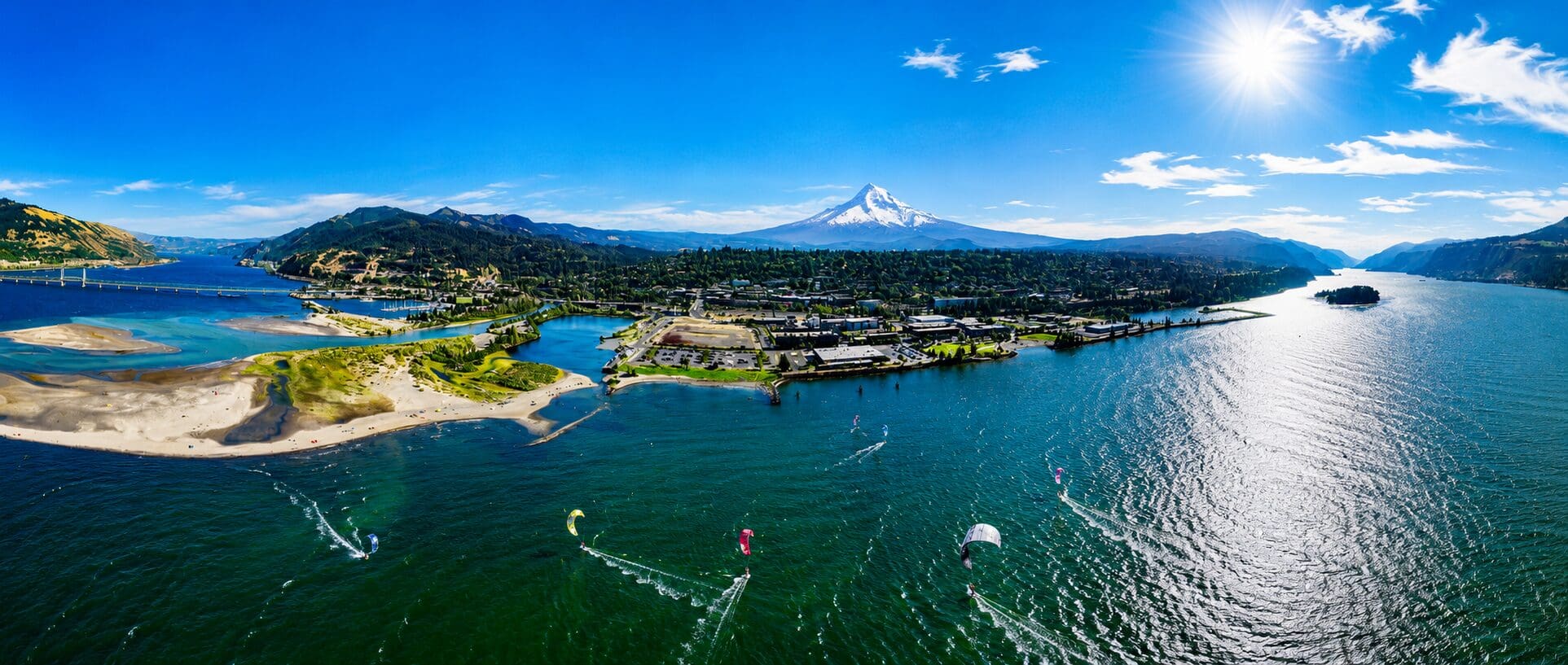
Well, look at my little hometown of Hood River, Oregon, all grown up!
Travel + Leisure just named Hood River, Oregon America’s Best Small Mountain Town for 2026!
And that is pretty damn cool!
KGW picked up the story too, and suddenly this little town in the Columbia River Gorge that I’ve called home for most of my life is getting national attention for something those of us who grew up here have known forever:
Hood River is one hell of a special place!
But let’s not forget about White Salmon, Washington, sitting right across the Columbia River.
White Salmon is every bit as much a part of my story. I grew up on both sides of this river, and when I talk about home, I’m really talking about this whole little stretch of the Columbia River Gorge — Hood River, White Salmon, Bingen and the communities surrounding them.
The river may separate Oregon and Washington, but growing up here, it never felt like two completely different worlds.
This whole Gorge is home.
But here’s the funny part.
Hood River was NOT always the beautiful, outdoorsy, winery-filled, restaurant-filled, pretty damn bougie little mountain town everybody wants to visit today.
I grew up here through the ’70s, ’80s and ’90s.
I got to watch Hood River become Hood River.
And trust me — she has had one hell of a glow-up!
Before Hood River, Oregon Was Bougie
Growing up in the Columbia River Gorge in the ’70s, ’80s and ’90s meant logging, working at the mills, working at the fruit packing houses, orchards, farming, wood cutting, horses, 4-H, rodeos and families working their asses off.
This was a working community, and for a lot of people, there wasn’t much money.
Logging and lumber were huge.
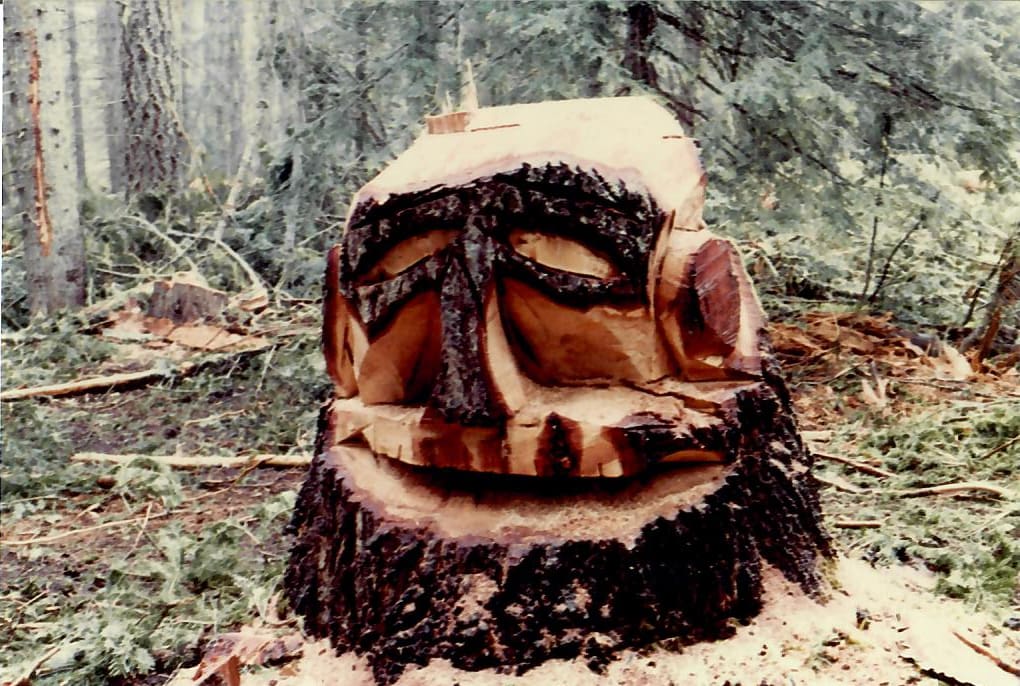
My dad was a logger for many years, and every once in a while he’d turn a leftover stump into a piece of chainsaw art. He’d carve a face or something else into it right there in the woods and just leave it behind. I believe this one was somewhere around Trout Lake or Glenwood, Washington. It was just one of those cool little things the loggers did that I remember from growing up.
There was Hanel Lumber in Odell and SDS Lumber Company in Bingen. My dad, Chuck, actually grew up in Staten Island, New York, before eventually making his way out West. He spent many years logging before going to work at SDS Lumber Company in Bingen.
Agriculture was just as much a part of life.
Orchards covered the hillsides. People worked in the fields. People worked in the packing houses. Underwood Fruit was a major part of life on the Washington side, and Hood River had its fruit packing operations on the Oregon side too.
These weren’t quaint little pieces of “Gorge history” to us.
They were where everybody worked.
Your dad might be logging or working at the mill.
Somebody else’s mom or dad might be working in the orchards or packing fruit.
And plenty of us kids worked in the bean-picking and strawberry-picking fields.
That was just life here.
Dad, SDS Lumber and the Smell of Wood
My dad was a logger for many, many years before eventually going to work at SDS Lumber Company in Bingen.
I used to go down to the mill while he was working.
Sometimes I legitimately needed to borrow five bucks for gas for my Volkswagen Bug or whatever teenage emergency I had going on.
And sometimes?
I probably just made up an excuse because I wanted to go see my dad.
I loved watching everyone work in that mill.
And more than anything, I loved the smell.
Oh my God, the smell of that wood.
To me, it was like a little slice of heaven.
I loved the smell of lumber then, and I still love wood to this day.
It’s funny what stays with you.
I couldn’t have known then that someday those mills and that entire way of life would become part of the story of the Hood River and Columbia River Gorge I grew up in.
Back then, it wasn’t history.
It was just Dad at work.
The Yellow Bus, Bean Fields and Black Hands
Agriculture wasn’t something I only watched other people do.
I worked in it too.
Picking fruit and vegetables wasn’t some adorable farm-to-table experience you did on vacation.
It was work.
When I was a kid, I picked beans and strawberries for Dickey Farms.
A yellow school bus would pick us up at the supermarket in White Salmon, Washington, and haul us down to the fields in Bingen, Washington, just down the hill.
My mom even came along to keep me out of trouble — which, if you know me, was probably a very wise decision!
My sister picked beans with us too.
And the beans?
Oh my God.
By the end of the day, your hands would be black from all the aphids on them!
You’d fill your bucket, carry it up to be weighed, and they’d give you a little ticket with a dollar amount based on how much your bucket weighed.
Then you’d go back out and do it again.
Another bucket.
Another ticket.
At the end of the day, you’d gather up all those little tickets, cash them in and get your money.
That was summer.
That was work.
That was Hood River, White Salmon and Bingen.
Long before the boutique hotels, wineries, breweries, fancy restaurants and outdoor-adventure tourism, people here logged, worked at the mills, packed fruit, worked the orchards, picked beans and strawberries and worked their asses off.
Mushroom Hunting, Berry Picking, Old Blue and Mom’s Pies
Not everything we picked was for a paycheck, though.
Some of my favorite summer memories were when we’d head out as a family to see what we could find growing around us.
We went mushroom hunting, marionberry picking, huckleberry picking — really, just about every kind of berry picking we could do!
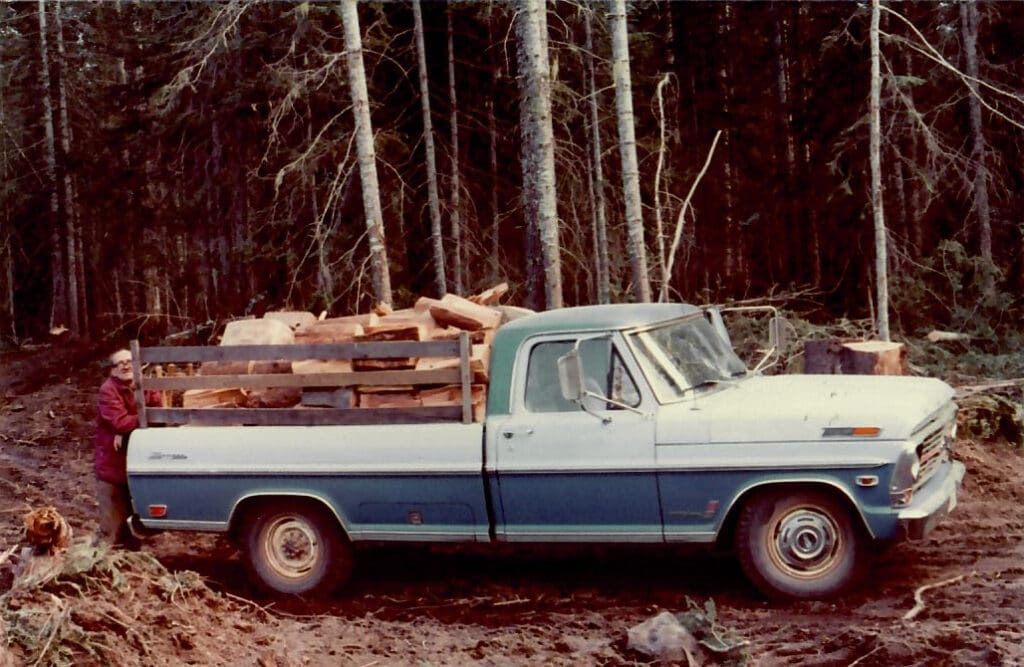
We’d pile into my dad’s two-tone, big-back-window ’69 Ford that we called Old Blue and drive up to Trout Lake or different parts of Hood River looking for berries and mushrooms.
And I still have Old Blue to this day, in memory of my dad.
We’d head out with our containers and start picking.
And sometimes my container wasn’t big enough.
If my bowl was full and there were still berries to pick, I’d grab the bottom of my T-shirt, pull it up and turn it into a makeshift bowl.
Yep. My shirt became the backup berry bucket!
I’d fill my turned-up T-shirt with berries and keep right on picking.
Then we’d pile everything — berries, mushrooms, kids and all — back into Old Blue and drive home.
Mom would take what we gathered and turn it into pies and homemade jams.
That was just part of summer.
We weren’t going to a trendy farm stand to buy a tiny jar of artisan jam.
We drove into the mountains and picked the damn berries ourselves!
Then Mom made the jam.
There was something really simple about growing up that way.
The woods, the fields, the orchards and the mountains weren’t someplace we went for a curated “outdoor experience.”
They were part of everyday life.
Some days you were picking beans because you were getting paid.
Other days you were riding around in Old Blue with your family, picking huckleberries until your bowl was full and your T-shirt had become the overflow container.
And if we found mushrooms?
Those were coming home too.
Horses, 4-H, The Silver Spurs, Rodeos and Parades
Horses were a huge part of my childhood too.
My sister and I were both in 4-H, and horses were just part of our lives.
Our 4-H horse group changed names a few times over the years, but one of the names I still remember was The Silver Spurs.
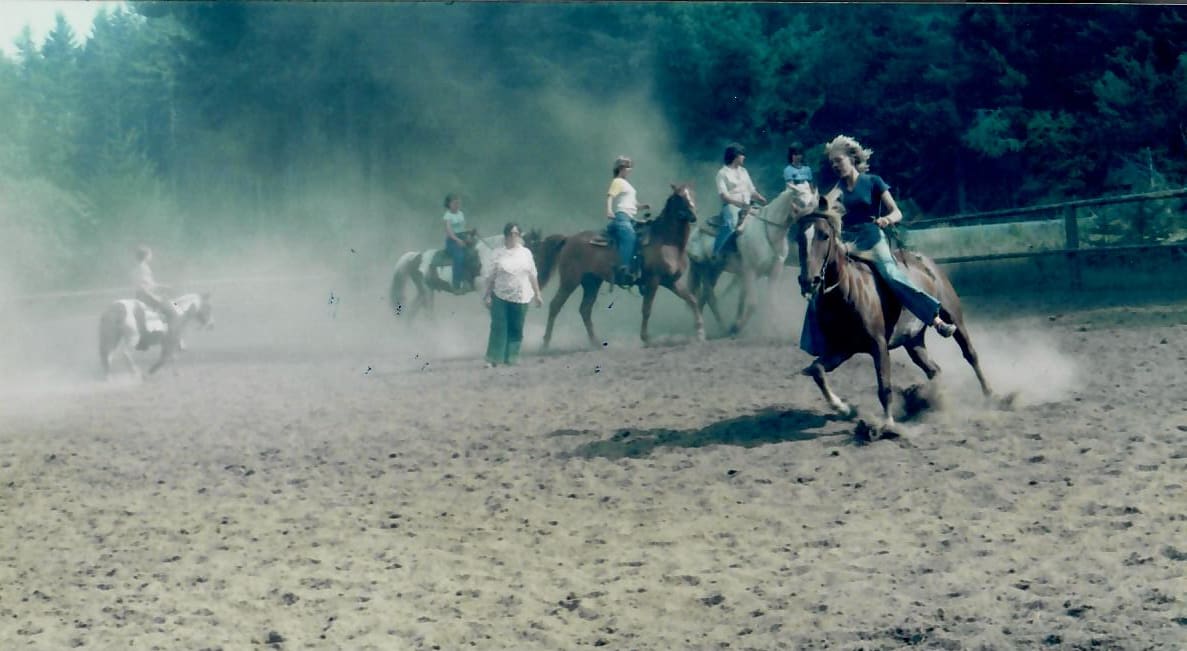
For a while, we were the Silver Spurs! And practice wasn’t exactly glamorous! We were constantly covered in dust and dirt. If the wind wasn’t throwing it around, the horses were. This was us practicing with the Silver Spurs up in Snowden, Washington.
And being part of that group meant we did a little bit of everything.
We rode all over the Gorge, competed in horse shows and rodeo — and I wasn’t just there for the participation ribbon.
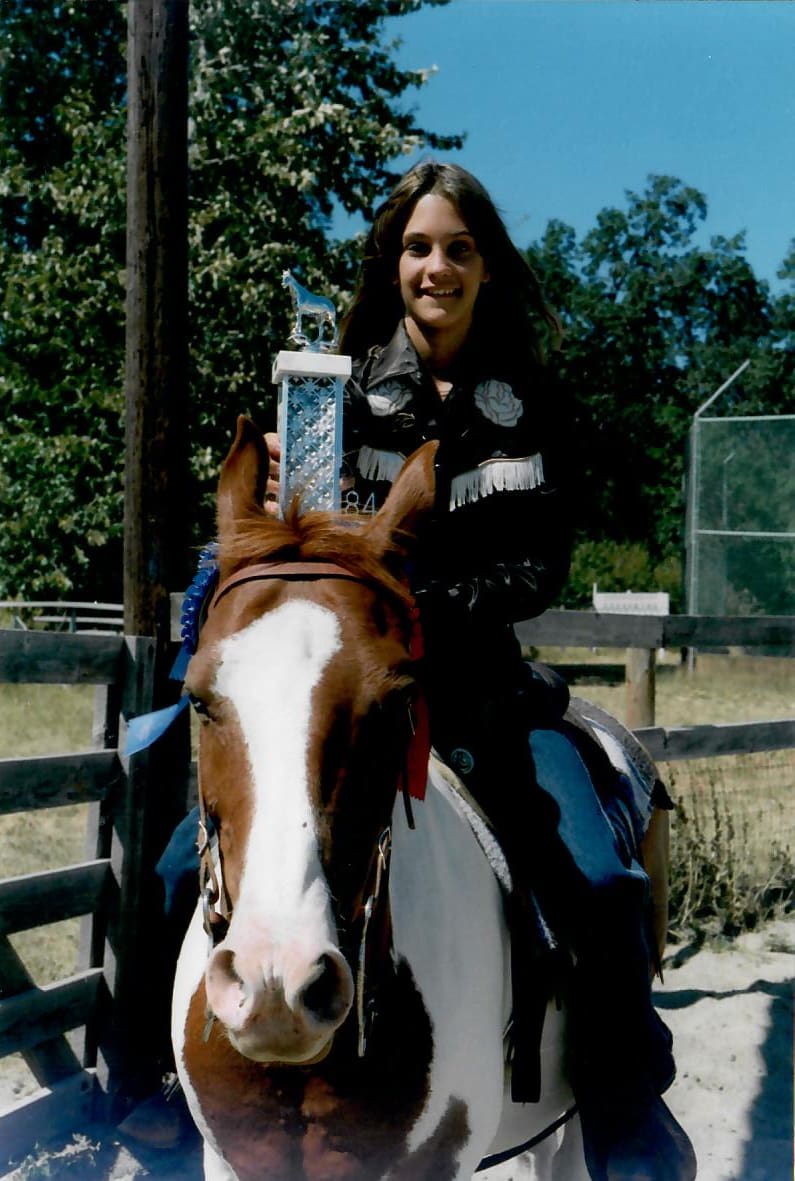
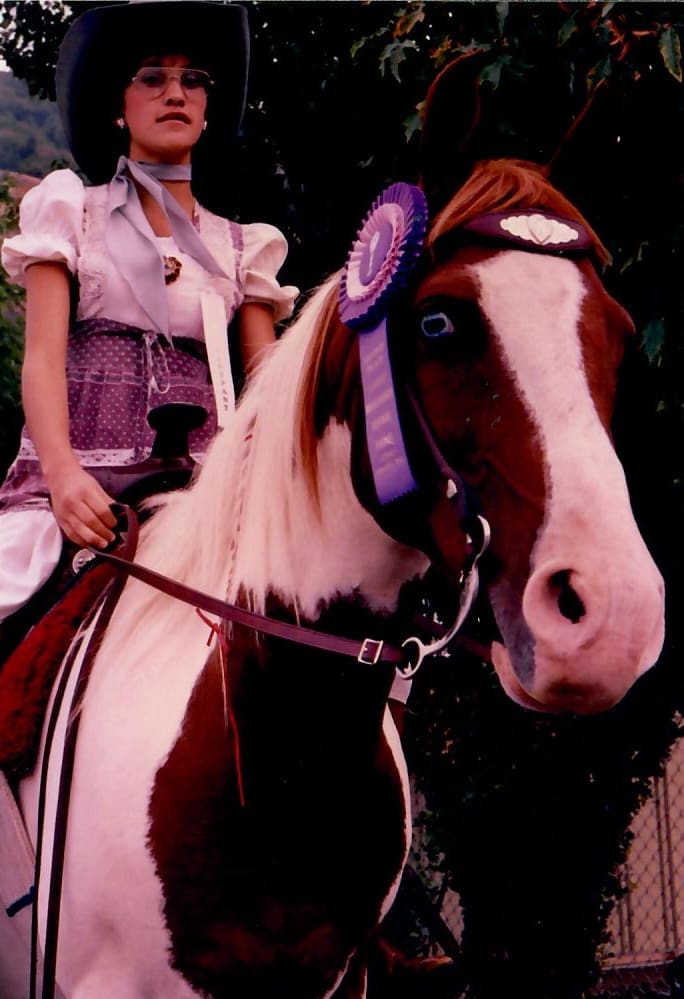
And can we take a minute to appreciate these outfits?! 😂 Back then, our parents dressed us up for these horse shows and somehow we thought we looked pretty damn cool. Looking at these photos now, I’m slightly horrified. Apparently I was fully committed to the look — fringe, cowboy hat, Patsy Cline costume and all.
I’m a little embarrassed to even put these photos on the internet, but they’re too damn funny not to share!
I was fucking good at it!
Summers meant fairs, horse shows and rodeos throughout the Columbia River Gorge and surrounding communities — Hood River, Goldendale, The Dalles and everywhere in between.
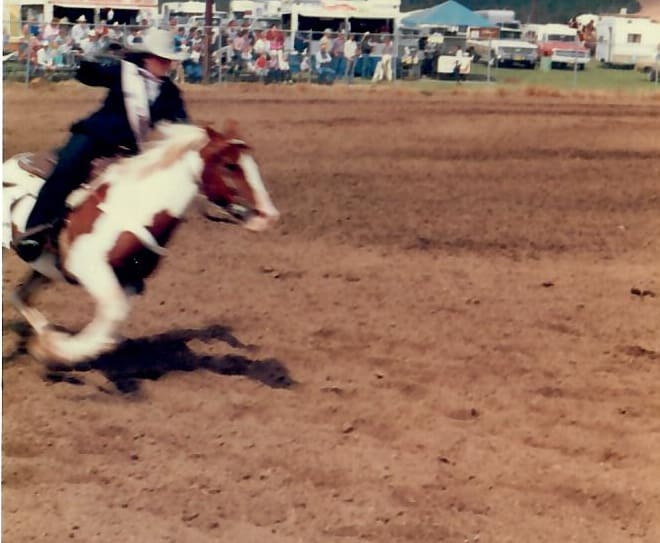
And then there were the parades.
Our 4-H group rode in what felt like every single parade around!
If there was a parade somewhere nearby, there was a pretty damn good chance my sister and I were going to be in it with our horses and our 4-H group.
For at least some of those years, that meant The Silver Spurs were coming through!
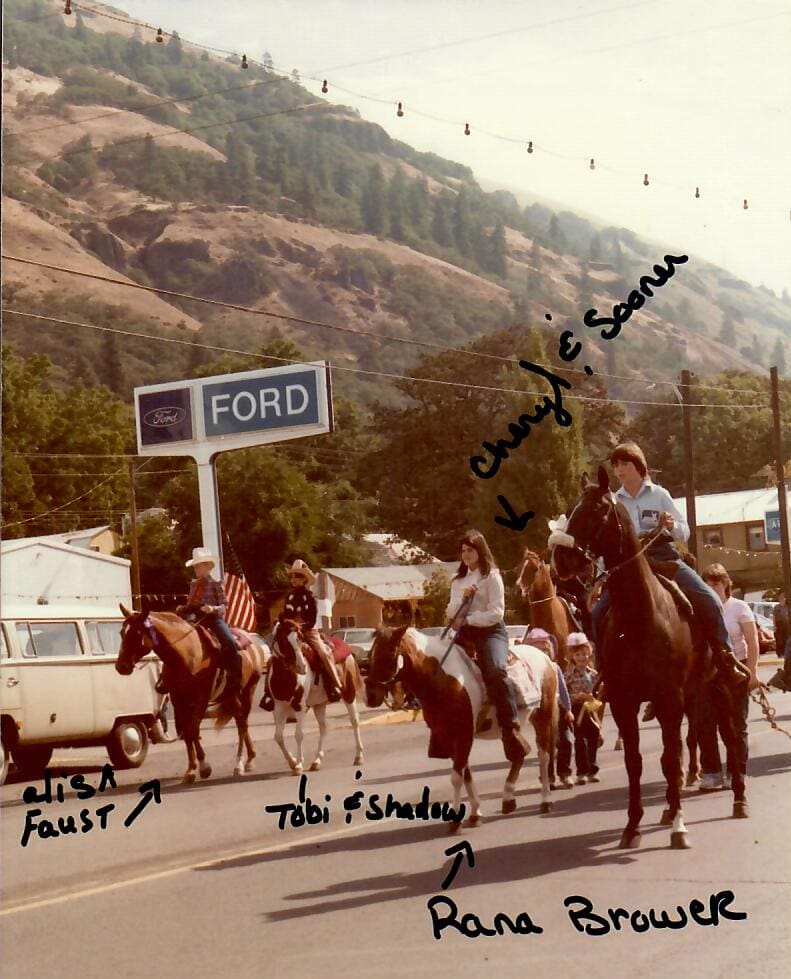
Horse shows.
Rodeos.
County fairs.
Parades.
Horses.
That was a huge part of growing up here.
And when we said we were going out on a trail back then, we weren’t necessarily talking about one of today’s beautifully maintained Hood River hiking trails with signs, maps, parking lots and thousands of reviews online.
There weren’t hiking trails everywhere like there are now.
Sometimes a “trail” was simply a path that cows, deer, coyotes or some other animal had worn through the land.
I’d get on my horse and ride it.
And most of the time, I wasn’t riding alone.
My Chesapeake Bay Retriever, Daisy, would come right along with me.
I named her after Daisy Duke from The Dukes of Hazzard, because of course I did!
So there I’d be, riding my horse through whatever trail we could find, with Daisy running along beside us.
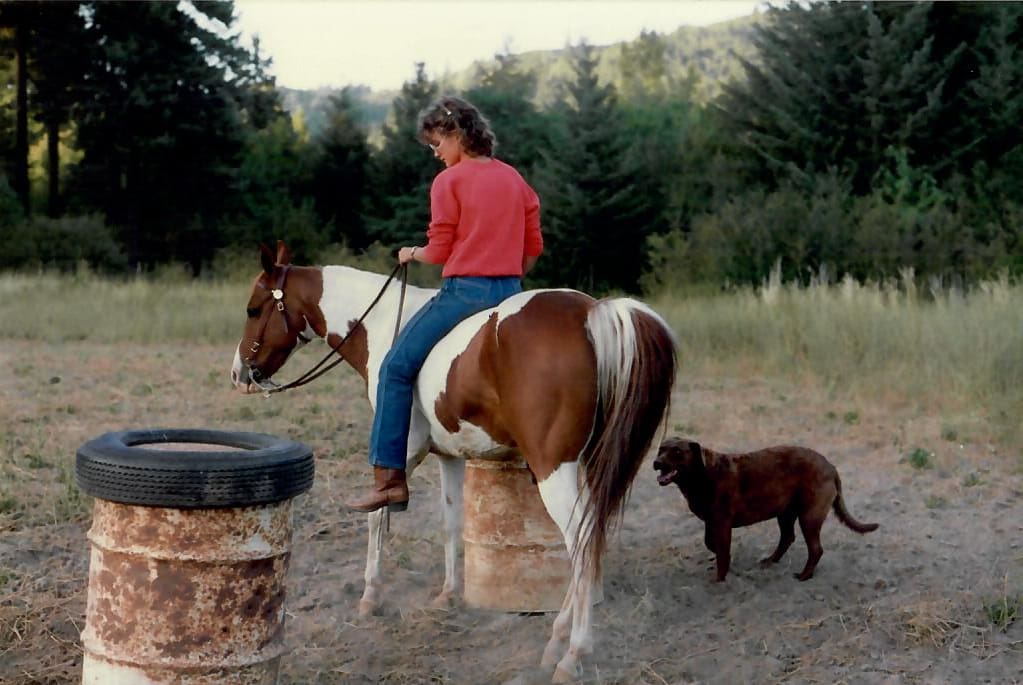
That was our recreation.
We didn’t know we were living in some future outdoor-adventure destination.
We were just kids growing up in the Columbia River Gorge — riding horses, bringing the dog along and exploring whatever was out there.
Then the Windsurfers Showed Up in Hood River
And then came the ’80s.
I still remember crossing the Hood River Bridge between White Salmon and Hood River, looking down at the Columbia River and seeing people out there on boards with sails.
What the hell are they doing out there?!
We eventually learned that this thing was called windsurfing.
And apparently the wind we’d spent our entire lives living with was something people would travel across the country — and eventually across the world — to experience.
If you’re from Hood River, White Salmon, Bingen or anywhere in the Columbia River Gorge, you know exactly what we called a really windy day:
IT’S NUKIN’!
Translation for everybody who didn’t grow up here:
The wind is absolutely fucking ripping!
And the Gorge had plenty of it.
The Columbia River Gorge creates a natural corridor through the Cascade Mountains. During summer, differences in temperature and atmospheric pressure between the cooler west side of the Cascades and the hotter country to the east help drive the strong winds through the Gorge that eventually made this area famous.
And Hood River wasn’t the only place where the windsurfing scene took off.
As the sport grew, windsurfers spread up and down the Columbia River Gorge looking for the best wind.
Places like Doug’s Beach, the Hatchery near White Salmon, Swell City, and launches throughout the Gorge became part of the culture.
Different spots had different conditions, different personalities and different crowds, but they were all connected by the same thing:
The wind.
On a nukin’ day, the Columbia River Gorge became one giant playground.
And then Hood River earned a name that has stuck for a very long time:
The Windsurfing Capital of the World.
Not Oregon.
Not the Pacific Northwest.
The fucking WORLD!
Think about that for a second.
The little working town I grew up around — logging, mills, orchards, fruit packing, bean fields and strawberry fields — became internationally known because people from all over the planet discovered what that wind could do on the Columbia River.
People traveled here for it.
Some stayed for the summer.
Some fell in love with the place and never really left.
And suddenly the wind that had always just been part of everyday life in the Gorge helped put Hood River on the map around the world.
The windsurfers came.
Then more windsurfers came.
People started moving here.
Businesses opened.
Competitions came.
Word spread.
And Hood River — along with White Salmon and the communities up and down the Gorge — started changing.
Hood River in the ’90s — When Everything Really Started Changing
By the ’90s, you could really see the transformation happening.
Windsurfing wasn’t some strange thing we saw from the bridge anymore.
Hood River had become known around the world for it.
Outdoor recreation was becoming part of the identity of the Columbia River Gorge.
People weren’t only coming here to work in timber or agriculture anymore.
They were coming here because they wanted to be here.
They wanted the Columbia River.
They wanted the wind.
They wanted Mount Hood.
They wanted Mount Adams.
They wanted the Gorge.
They wanted the lifestyle.
And little by little, Hood River changed with them.
The Hood River I knew as a kid and the Hood River people know today started meeting somewhere in the middle.
Right Between Two Volcanoes and One Mighty River
And then there’s the geography of this place, which is pretty damn spectacular all by itself.
Hood River, Oregon and White Salmon, Washington sit across the Columbia River from one another, right in the heart of the Columbia River Gorge, with Bingen sitting just down the hill from White Salmon on the Washington side.
And we’re sitting between two volcanoes — Mount Hood to the south and Mount Adams to the north. And Mount St. Helens is just around the corner too. I was a kid when she blew her top in 1980, so I actually got to watch that piece of Pacific Northwest history happen in real time. A year later, we were standing up there looking at a mountain that had literally changed shape.
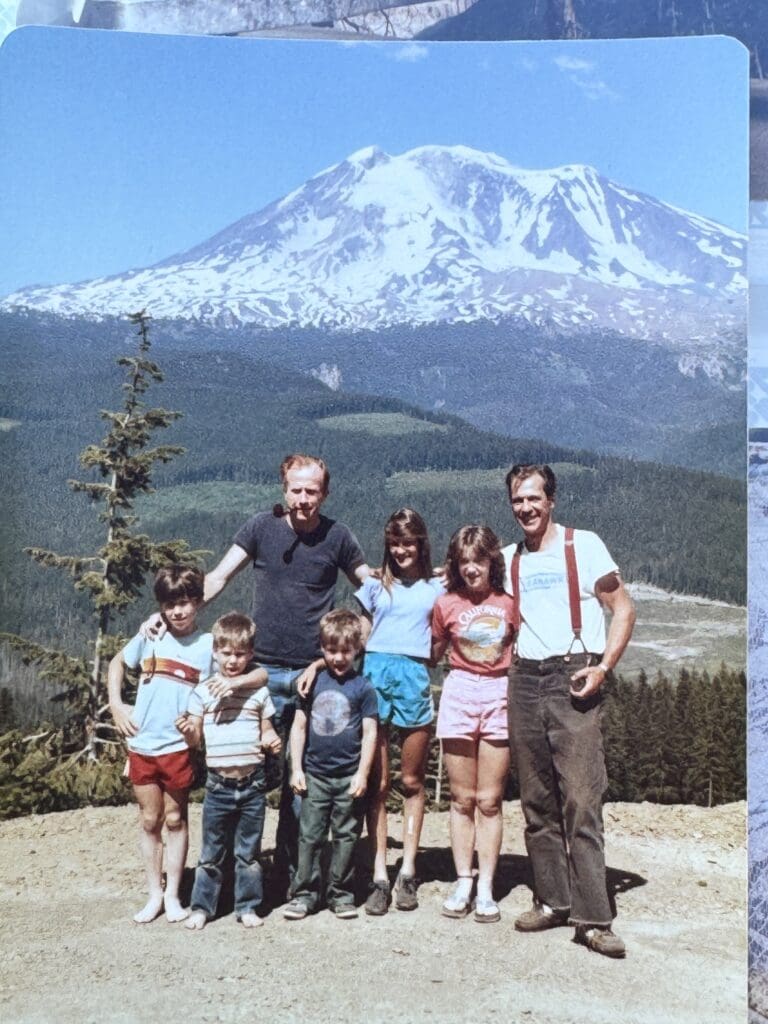
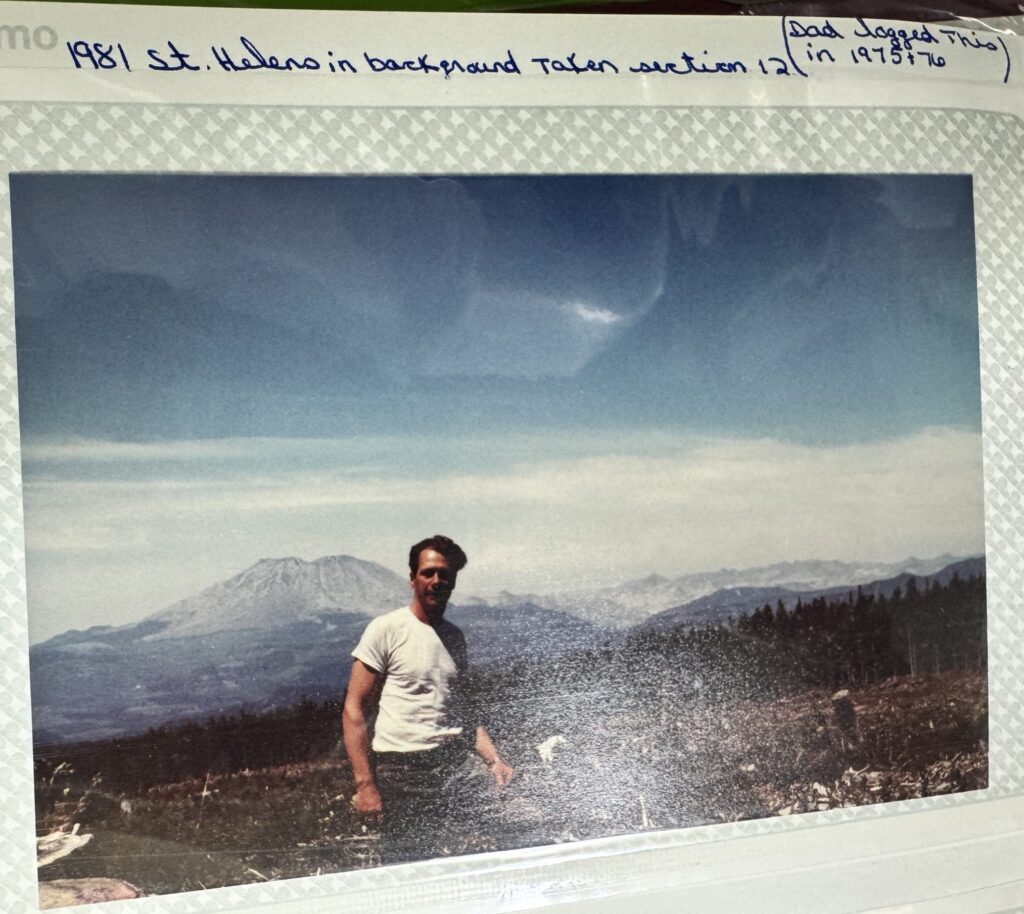
There are other volcanoes throughout the Cascade Range, of course, but these are the two that have always framed home for me.
One direction, Mount Hood.
The other, Mount Adams.
And running right between Oregon and Washington is the mighty Columbia River.
Mountains, volcanoes, river and Gorge.
That’s home.
When you grow up surrounded by it, you don’t necessarily stop every five minutes and think, Holy shit, look where I live.
It’s just where you live.
Then you grow up, travel around the world, come home and realize…
Holy shit. Look where I live!
Hood River, Oregon Today
And look at her now!
Today, Hood River is known around the world for windsurfing, kiteboarding, wing foiling, mountain biking, skiing, hiking, waterfalls, wineries, breweries, orchards, restaurants, weddings, art, incredible food and some of the most ridiculous scenery on the planet.
And yes…
She’s pretty damn bougie now!
But underneath all of that, I still see the Hood River, White Salmon and Bingen I grew up with.
I see the orchards.
I see the Columbia River.
I see Mount Hood and Mount Adams.
I remember riding horses on trails that weren’t really trails, with Daisy running along beside me.
I remember riding in parades with our 4-H group.
I remember being one of the Silver Spurs.
I remember the county fairs, horse shows and rodeos.
I remember the yellow bus.
I remember picking beans and strawberries.
I remember those disgusting little aphids!
I remember riding around in Old Blue with my family.
I remember picking huckleberries and marionberries until my bowl was full and my T-shirt became the backup.
I remember Mom turning what we brought home into pies and jams.
I remember the smell of freshly cut wood at SDS.
I remember walking into that mill to find my dad.
I remember the packing houses and the orchards being places where people actually went to work every day.
I remember crossing the Hood River Bridge and wondering what the hell those people were doing out on the water.
And I remember watching this community change decade by decade.
Hood River Named America’s Best Small Mountain Town for 2026
Now Travel + Leisure has officially named Hood River, Oregon America’s Best Small Mountain Town for 2026.
And I have to admit — that’s pretty fucking cool!
First the little town I grew up around became known as the Windsurfing Capital of the World.
And now?
America’s Best Small Mountain Town.
Not bad, Hood River. Not fucking bad!
People from around the world now come to Hood River, White Salmon and the Columbia River Gorge for the mountains, wind, water, food, wine, outdoor adventures and scenery that those of us who grew up here sometimes took for granted.
And Travel + Leisure isn’t wrong.
I’m incredibly proud of what Hood River has become.
But I’m also really damn proud of what it was.
Because before Hood River became a destination, it was home.
It was a working town.
It was logging and mills.
Orchards and fruit packing houses.
Bean fields and strawberry fields.
Mushrooms and wild berries.
Horses and 4-H.
County fairs, horse shows, rodeos and parades.
People getting dirty and working hard.
And I think knowing where Hood River came from makes what it has become even more special.
From Growing Up Here to Becoming a Hood River, Oregon Photographer
Maybe that’s part of why being a photographer in Hood River, Oregon and the Columbia River Gorge means so much to me.
These aren’t just pretty mountains and cool photography locations I found on Google.
This is home.
I grew up looking at Mount Hood and Mount Adams.
I rode horses through this landscape.
I grew up along the Columbia River and on both sides of the Gorge.
I watched Hood River change from a struggling logging and agricultural community into a place people travel from around the world to experience.
And now I get to photograph people here.
I photograph underwater portraits in Hood River.
I photograph weddings and elopements throughout Hood River, White Salmon and the Columbia River Gorge.
I photograph portraits, seniors, maternity, branding and adventures surrounded by the same mountains, river and landscape I’ve known since I was a kid.
And every time I pick up my camera here, I’m photographing more than a beautiful location.
I’m photographing home.
So yes, Travel + Leisure…
You got this one right!
Welcome to Hood River, Oregon — America’s Best Small Mountain Town for 2026.
And right across the river, don’t forget about White Salmon, Washington.
I’ve known this whole little corner of the Gorge was pretty damn special for a very long time!
— Tobi 💙
Want to see more of what I photograph?
Visit Tobi Rose Photography • Underwater Photography • Boudoir Photography • Weddings & Elopements
Follow along on Instagram: Tobi Rose Photography • Rose & Lace by Tobi Rose
Ready to make some trouble? Talk to me, Goose.
Curious about the thing I do that you won’t find everywhere else? Take a look at my underwater portrait experience.
THE Columbia River Gorge, Windsurfing Capital Of The World!

Share this post: